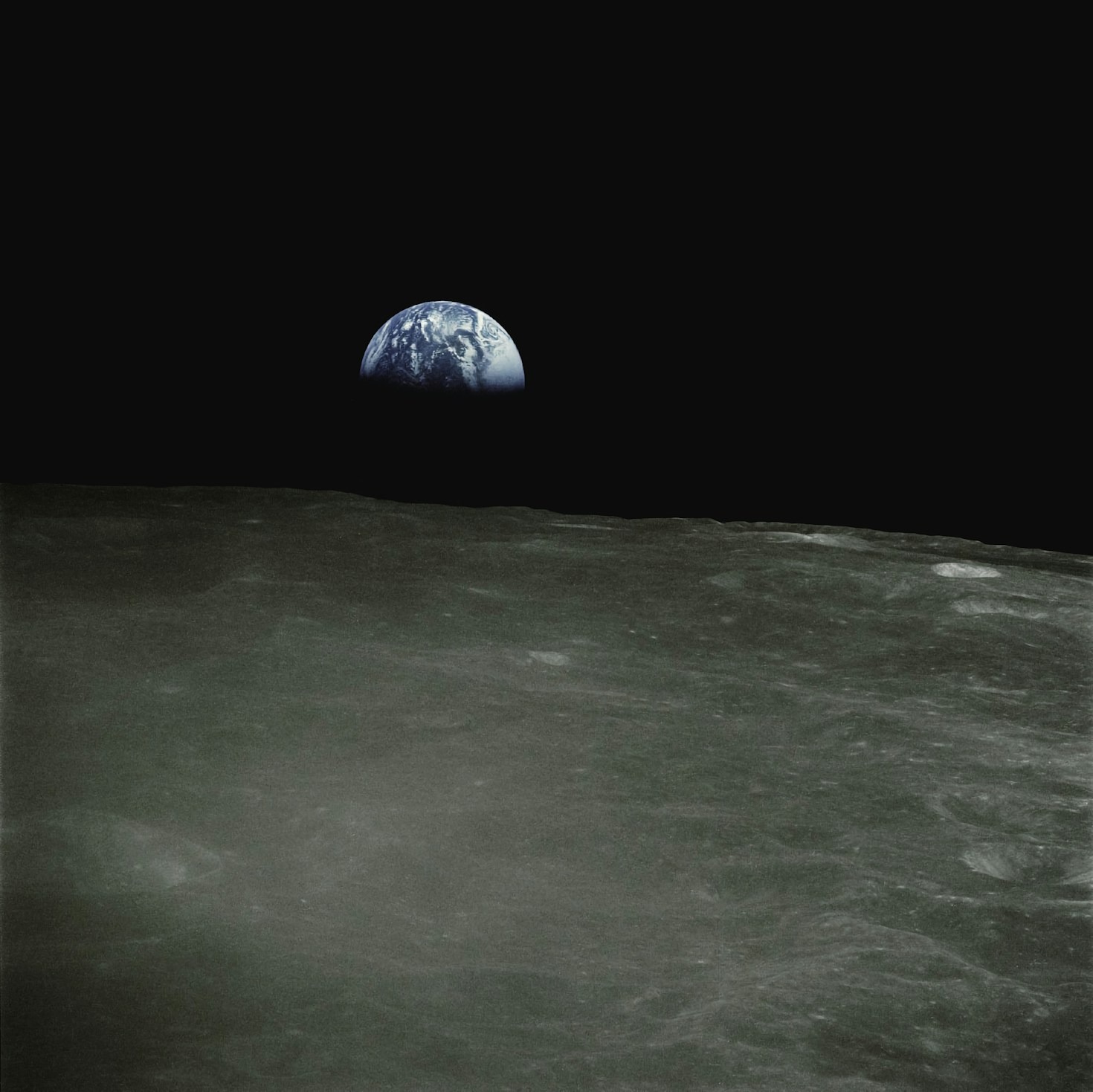
The Hidden Utility of Space Science
Space exploration has always inspired wonder. But beyond the headlines about rockets and rovers, there lies a quieter, more powerful truth: space science doesn’t just expand our understanding of the cosmos—it helps solve pressing problems here on Earth. That bridge between the abstract and the actionable is where I do some of my most important work.
Space as a Strategic Investment
I often say that space exploration is not a luxury. It’s a strategic investment in knowledge systems, innovation pipelines, and institutional resilience. The technologies we build for lunar missions, planetary mapping, and data interpretation aren’t confined to vacuum-sealed labs. They inform how we plan for climate resilience, manage complex systems, and make better decisions in uncertain environments. The Moon might be distant, but the tools, strategies, and thinking we develop to reach it have near-term, grounded value.
Remote Sensing in Everyday Systems
Take, for example, remote sensing. The same techniques we use to detect mineral composition on the lunar surface are now being adapted to track wildfires, assess agricultural yield, and map urban heat islands. These aren’t one-to-one transfers; they require interdisciplinary collaboration and systems thinking. But the core capabilities—high-resolution imaging, predictive modeling, environmental sensing—are fundamentally the same.

Lunar Ops and Earth-Based Systems
Another area where space-derived systems play an essential role is in operational planning. Within our space exploration endeavors, our work on Artemis-aligned lunar surface operations has generated frameworks that can be applied to remote logistics, autonomous systems, and emergency response coordination. Managing a lunar science campaign with limited bandwidth, delayed communication, and high risk is a lot like managing a humanitarian supply chain in the wake of a natural disaster. Constraints reveal the need for better design—and space teaches us to design for resilience.
Translating Discovery into Infrastructure
These applications don’t emerge automatically. They require intention. I’ve come to believe that one of the most important responsibilities of scientific leadership is not just to discover, but to translate. We must build the bridges between fields, sectors, and communities that allow insight to become infrastructure. This takes time, yes, but more importantly, it takes fluency across disciplines, and a willingness to see scientific knowledge as a public asset, not just a private pursuit.
The Convergence Moment
We are at a moment where space exploration and societal need are converging. The Artemis program is not just a symbolic return to the Moon—it’s a testbed for everything from autonomous construction to closed-loop life support. These technologies could redefine how we live on Earth, especially in climate-stressed or resource-constrained regions. But only if we prioritize real-world pathways alongside exploration goals.
Science, Storytelling, and Structure
There’s a risk that the public sees space as disconnected from daily life. That’s a narrative problem—and it’s one we can solve. We need better storytelling, yes, but we also need better structures for translating science into benefit. That means including community voices in research planning, designing for dual use cases, and investing in workforce pathways that tie exploration to equity.
Designing for Impact
My work can be described as sitting at the intersection of science, strategy, and society. That’s not a tagline; it’s a design principle. I believe that our most ambitious technical projects should also be our most humane—and that the future of space exploration depends as much on who benefits as on how far we go.
One Mission, Many Outcomes
To truly bridge exploration and real-world application, we must stop treating them as separate missions. They are interdependent. They both demand rigor, creativity, and a commitment to solving problems that matter. And when we build with that mindset, we don’t just go further. We bring more people with us.
Further Reading & Resources:
- NASA Spinoff Database — Explore technologies developed for space that now benefit life on Earth.
- European Space Agency: Space Solutions — How ESA fosters space-based innovation for terrestrial challenges.
- National Academies: Thriving on Our Changing Planet — Decadal strategy for Earth systems applications based on space tech.
- MIT Media Lab Space Exploration Initiative — Examples of how space research intersects with art, design, and societal innovation.
- NASA’s Earth Science Applied Sciences Program — How NASA data supports real-world solutions across agriculture, health, water, and disasters.